
Appraisals Don’t Fail Because of the Increment.
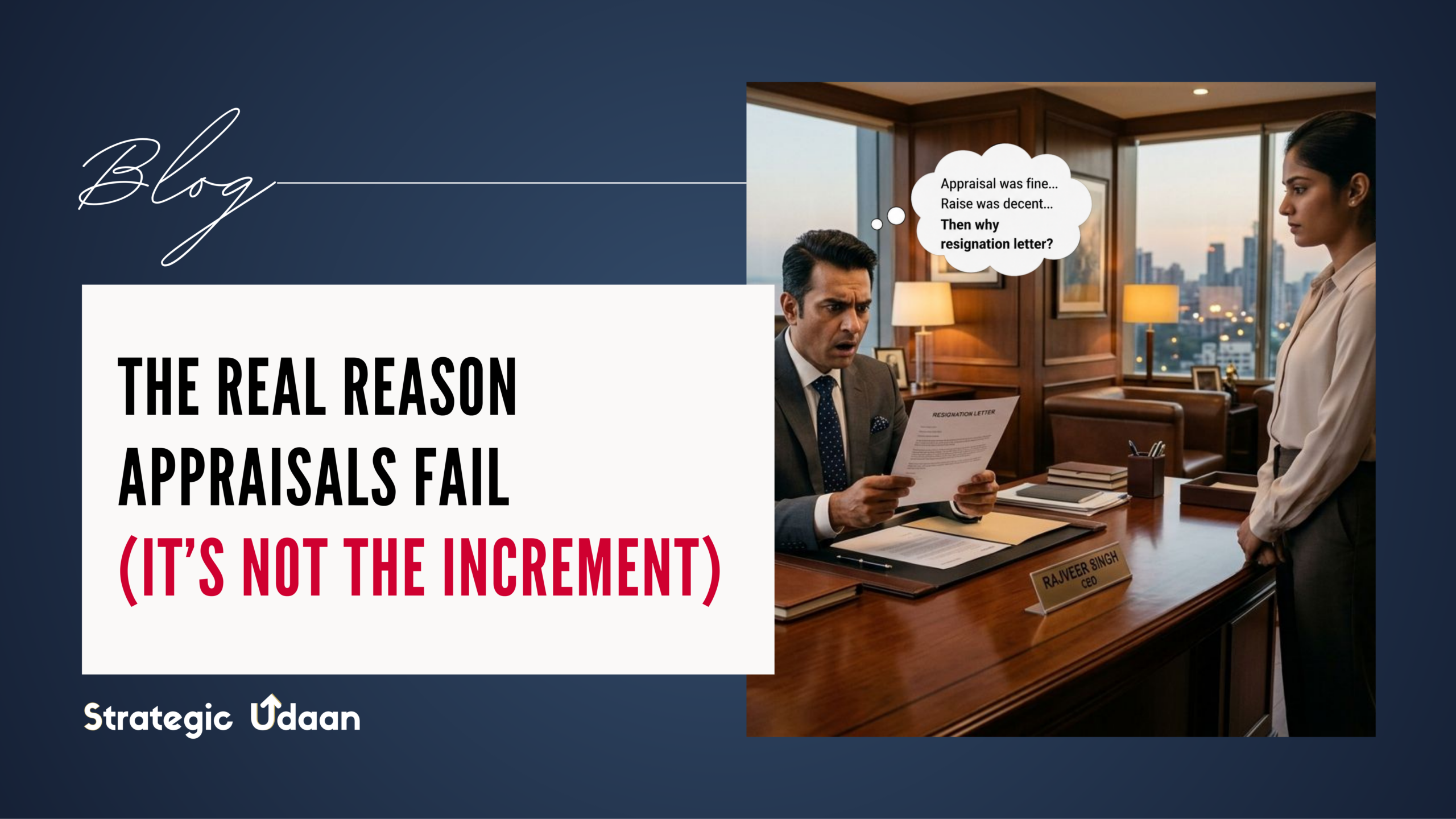
Appraisal season is here. Most conversations will revolve around ratings, increments, and comparisons….Some walk out happy 🙂 many don’t…🚩and then the ripple starts.
Comparisons, hush-hush conversations about who got what, a visible dip in energy, and in some cases, the “maybe it’s time to move on” discussions. For a business owner or leader, this is the most frustrating part. You’ve stretched budgets, Tried to be fair, Balanced numbers with reality – Yet the outcome feels like disengagement instead of alignment.
The Core Problem
Why Do Employees Feel Demotivated After Appraisals Even When Given a Raise?
The outcome of an appraisal is just a symptom. The real problem is how the conversation is handled.
When someone walks out demotivated, it’s rarely because of the number alone.
It’s because they leave without:
1. Clarity on where they actually stand.
2. Clarity on what is expected of them going forward.
3. Clarity on what lies ahead for their career here.
In many cases, they walk out feeling unseen, undervalued, and unsure if growth is even possible for them here. The number becomes a symbol of all of that – when the real failure was the conversation itself.
Do not fix morale after the appraisal. Fix the conversation before it.

The Entrepreneur’s Journal
Growth isn’t about doing more. It’s about asking the right questions.
-
365 powerful prompts to unlock clarity
-
3-year format to track real progress
-
Covers clients, team, sales, operations & leadership
-
Builds a daily reflection habit that fuels growth
The Fix?
How Should a Business Owner Structure an Appraisal Conversation That Actually Motivates?
Change the structure of the conversation – not just the number.
Here’s a five-step framework that works:
01 – Start With the Bigger Picture
Anchor the conversation in context before performance. Where is the team — and the business — headed this year?
Ask yourself: Have I shared where we’re going before asking how they’re performing?
02 – Make It Personal
Where does this person fit into that picture? Why does their specific role matter?
Help them feel the weight of their contribution.
03 – Ground It in Reality
Pull out their KPIs. Talk about actual performance — what worked, where they’ve delivered, the value they’ve created, and where they’re falling short.
Vague feedback doesn’t build confidence. Specifics do.
Let the numbers do the talking.
04 – Shift to Growth
Identify two or three skills or KPIs that, if improved, will create the biggest shift in their performance and trajectory.
05 – Give Direction – Then Listen
If this is achieved, what opens up for them? Show them the trajectory you see.
Then pause and ask:
“What kind of support do you need from me?”
“What kind of growth actually excites you?”
Manager Readiness
How Do I Know If My Managers Are Prepared to Deliver Appraisals Effectively?
Most appraisals fail before the conversation even begins, because managers show up unprepared.
As a business owner or leader, it is your responsibility to ensure the prerequisites are in place before your managers walk into those rooms.
The Manager Readiness Checklist~
CHECK 1: Have they studied their team’s KPIs and identified clear, specific points for appreciation and improvement?
CHECK 2: Have they reviewed inputs from quarterly check-ins and tracked progress over the full period?
CHECK 3: Have they documented any cultural misalignment that needs to be addressed?
CHECK 4: Have they prepared… and practised… any hard-hitting feedback that needs to be delivered with care?
If the answer to any of these is no, the appraisal isn’t ready to happen. Delay it rather than deliver it poorly – the cost of a bad conversation is higher than the cost of rescheduling.
The Stakes
What Happens to a Business When Appraisals Become a Formality?
The moment appraisals become a box-ticking exercise, you start paying for it – immediately.
Not in one dramatic event, but in the slow erosion of the things that actually drive your business forward.
- Top performers start questioning whether growth is real here
- Mid-level employees disengage quietly – they stop going the extra mile
- Salary comparisons circulate and morale takes a hit
- “Time to move on” conversations begin – often with your best people first
You spend the next quarter fixing morale instead of building momentum.
The difference between an appraisal that motivates and one that damages shows up immediately in how your team feels, performs, and stays.
Resources
A good appraisal conversation does not happen automatically.
It requires preparation, structure, clarity, and the ability to handle difficult discussions well.
Most managers were never trained for that.
So instead of leaving appraisal quality to chance, I created two practical resources to help leaders handle these conversations better.
If you are committed to level up your appraisal game…Email me about the challenges you are facing with your current appraisal system at aanjali@strategicudaan.com, and I will personally check the context and send the appropriate resource…
Resources to Help You Get This Right
Appraisal Alignment Guide
Helps managers structure appraisal discussions with clarity and direction.
How to Give Powerful Feedback
Helps leaders handle difficult conversations without damaging morale.
Frequently Asked Questions
What Business Owners Are Actually Asking This Appraisal Season
My budget is tight this year. How do I retain good employees when I can't give them the increment they expect?
Be honest. Don’t dress it up. Tell them what the business can do right now, and pair it with a clear conversation about where they’re headed.
People don’t only leave for money – they leave when they feel invisible.
The conversation is what you can control today.
My employee is disputing their rating. We're going back and forth and it's getting nowhere.
Do you have the data to back it up?
If KPIs weren’t set clearly, if there were no documented check-ins – this dispute was always coming.
The problem isn’t the employee. The problem was the system.
Can I fix a bad appraisal process mid-cycle?
Honestly? Not fully.
You can improve the conversation. You cannot recreate missing data.
What you can do is decide that next year will be different.
The salary comparison talk has already started. How do I stop the damage?
You probably can’t stop the talk.
But you can make each conversation so clear and personal that comparisons lose relevance.
My managers are not equipped to give hard feedback. What do I do right now?
Sit with them. Role-play. Prepare them.
Don’t assume they know – most managers were never taught.
How do I handle a high performer who expected a promotion that isn't happening this cycle?
Be direct. Be specific.
They can handle the truth. They can’t handle being strung along.
What’s the one thing I can do right now to make this appraisal cycle less painful?
Change the structure of the conversation.
That alone will change how people walk out of the room.
How do I build an appraisal system that actually works?
KPIs set at the start.
MIS tracking in place.
Quarterly check-ins happening.
Feedback is ongoing – not saved for one conversation.
For Next Year
This cycle may already be in motion.
But next year doesn’t have to look like this.
KPI frameworks. MIS alignment. Manager readiness. Appraisal conversation structure.
I help business owners build the system so the cycle runs clean — every year.
Freedom Isn’t a Perk. It’s the Point.
Let’s Build a Business That Gives It Back to You.
Services
Process Audits
Process reDesign
Training Material Creation
Contact
team@strategicudaan.com
9575560200
11 Mangal Nagar, Rajiv Gandhi Circle, Indore 452014
Hours
Monday - Friday
9 AM to 6 PM
Follow
Terms of Service | Privacy Policy